Imprints of Existence
Imprints of Existence emerges from a reflection on how human existence leaves behind traces some visible, others barely perceptible within individual and collective consciousness. Rather than treating existence as a fixed identity or a stable condition, the exhibition approaches it as an evolving process shaped by memory, environment, power, and psychological experience. Here, the idea of an “imprint” carries a dual meaning: it marks presence while simultaneously hinting at absence, loss, and fading.
At the heart of the exhibition lies the belief that every lived moment produces a residue. These residues may be emotional, physical, ideological, or spiritual, and over time they accumulate to form layered narratives of self and society. Human existence, much like geological formations, is composed of overlapping strata of moments of birth and decay, action and withdrawal, speech and silence. The artworks in this exhibition act as quiet excavations of these layers, revealing what often remains unspoken.
Imprints of Existence emerges from a reflection on how human existence leaves behind traces some visible, others barely perceptible within individual and collective consciousness. Rather than treating existence as a fixed identity or a stable condition, the exhibition approaches it as an evolving process shaped by memory, environment, power, and psychological experience. Here, the idea of an
“imprint” carries a dual meaning: it marks presence while simultaneously hinting at absence, loss, and fading.
At the heart of the exhibition lies the belief that every lived moment produces a residue. These residues may be emotional, physical, ideological, or spiritual, and over time they accumulate to form layered narratives of self and society. Human existence, much like geological formations, is composed of overlapping strata of moments of birth and decay, action and withdrawal, speech and silence. The artworks in this exhibition act as quiet excavations of these layers, revealing what often remains unspoken.
The exhibition deliberately moves away from linear narratives. Instead, it aligns itself with non-linear understandings of time found in Eastern philosophy and contemporary critical thought. Existence is not presented as a steady progression toward meaning, but as a series of repetitions, disruptions, and transformations. In this sense, the imprint functions as a temporal mark evidence that something once existed, even if its presence is now fragmented. This resonates with philosophical notions of the “trace,” where meaning persists through what is partially absent.
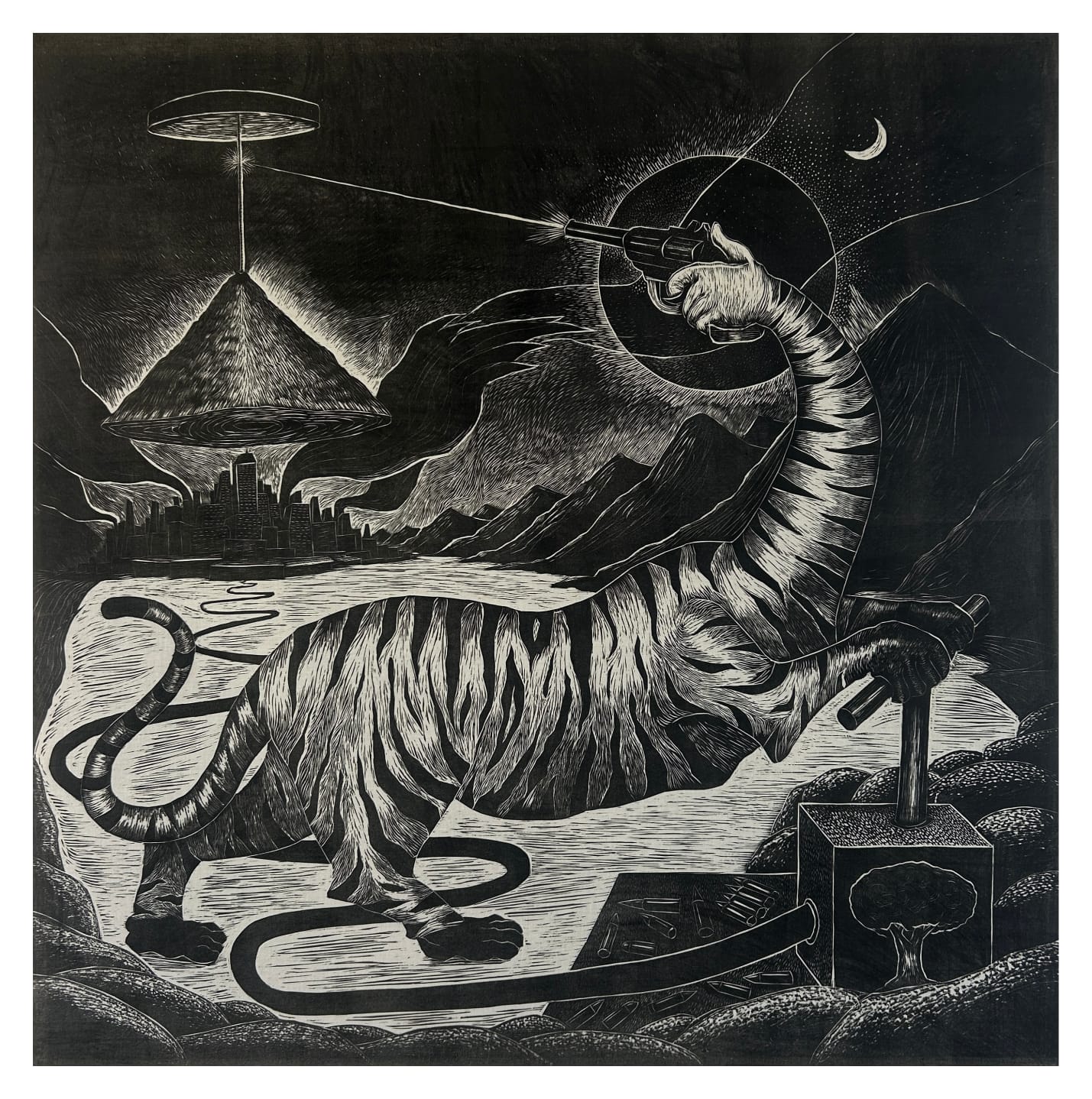
A central concern of Imprints of Existence is the relationship between the body and power. The body appears not simply as a biological form, but as a surface upon which systems of control, labor, memory, and resistance are inscribed. Bound hands, silenced voices, abstracted figures, and compressed or expansive spaces suggest how authority operates subtly, shaping not only physical action but also perception, fear, and silence. The exhibition questions how power leaves enduring psychological marks long after visible structures disappear.
Running parallel to this is the imprint of nature and environment. Nature is not treated as a passive backdrop but as an active presence that shapes human consciousness. Landscapes, organic rhythms, cycles of growth and erosion function as metaphors for inner states of being. In the context of ecological anxiety, nature emerges both as a witness to human existence and as a force that inscribes its own ethical and emotional marks upon memory.
The exhibition also engages deeply with psychological imprints formed through lived experience, trauma, repetition, and introspection. Several works rely on abstraction rather than narration, allowing color, texture, space, and tension to carry emotional memory. These visual languages suggest that the mind itself is a constantly shifting landscape, shaped by both internal impulses and external pressures.
Importantly, Imprints of Existence does not seek closure or resolution. Instead, it creates a contemplative space where uncertainty is acknowledged as a condition of contemporary life socially, politically, and emotionally. Fragmentation is not treated as failure, but as a reflection of a world in which identities remain fluid, histories contested, and futures unresolved.
Conceptually, the exhibition positions art as a threshold a liminal space between experience and memory, presence and absence, the visible and the unseen. The imprint, therefore, is not an endpoint but an invitation: to pause, to reflect, and to recognize one’s own traces within a larger continuum of existence.
Ultimately, Imprints of Existence suggests that existence is not defined by permanence or monumentality, but by attentiveness. What endures is not the form alone, but the awareness with which life is lived and the subtle marks that awareness leaves behind.
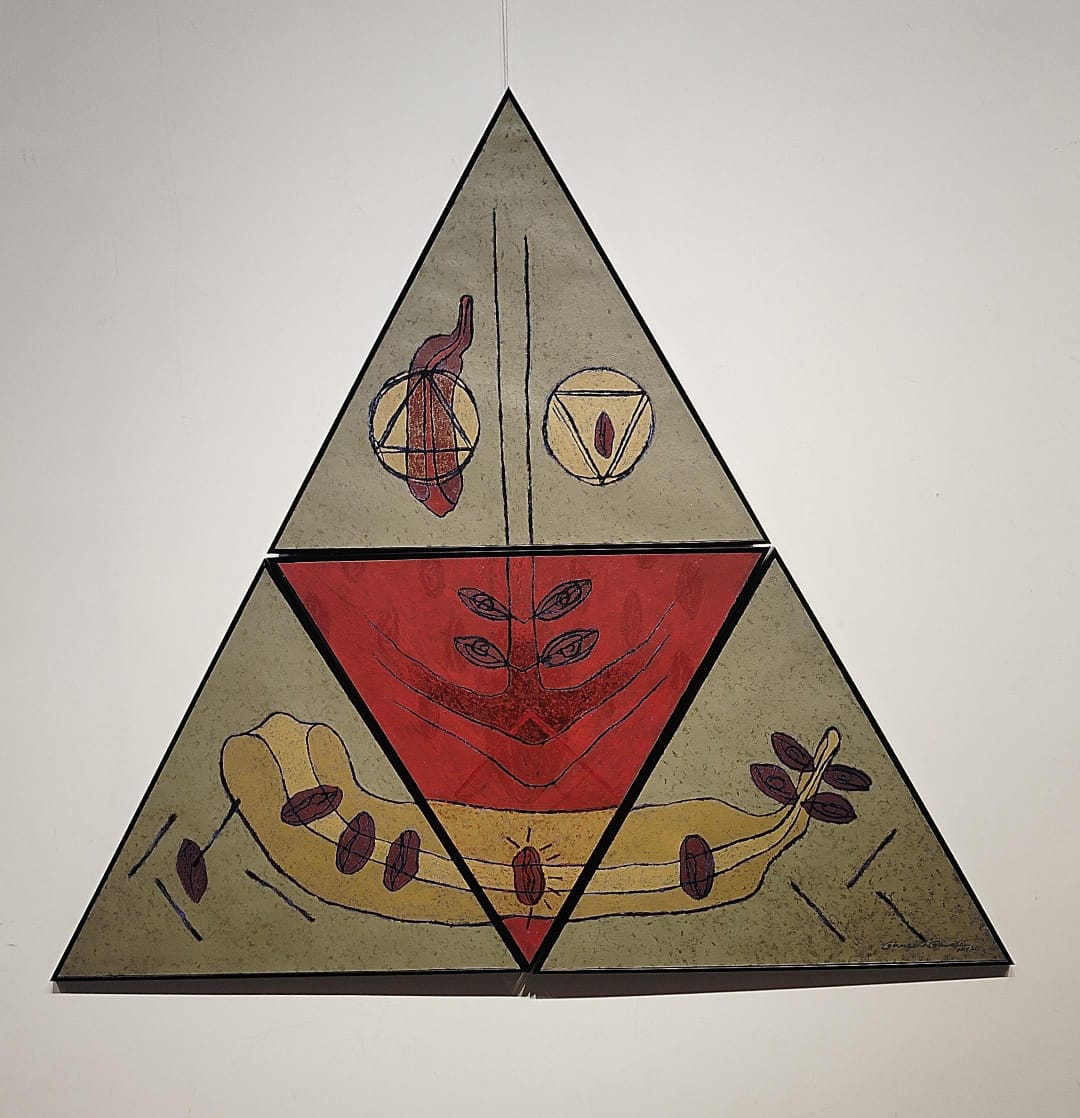
Ganesh Hindurao Gawali’s practice approaches existence not as a linear narrative but as a cyclical and psychological process. Birth, growth, decay, and death are not treated as oppositional stages; instead, they emerge as interconnected states within an ongoing continuum of being. Through geometric forms, symbolic signs, and rhythmic structures derived from biological processes, Gawali constructs a meditative visual language.
In his work, the “imprint” functions as a residue of both biological memory and mental repetition. Each form becomes an inscription of lived experience, suggesting that the mind continuously rewrites itself through memory and perception. His imagery aligns with philosophical notions of cyclical time found in Eastern thought, positioning existence as an internal, reflective condition rather than a fixed identity.
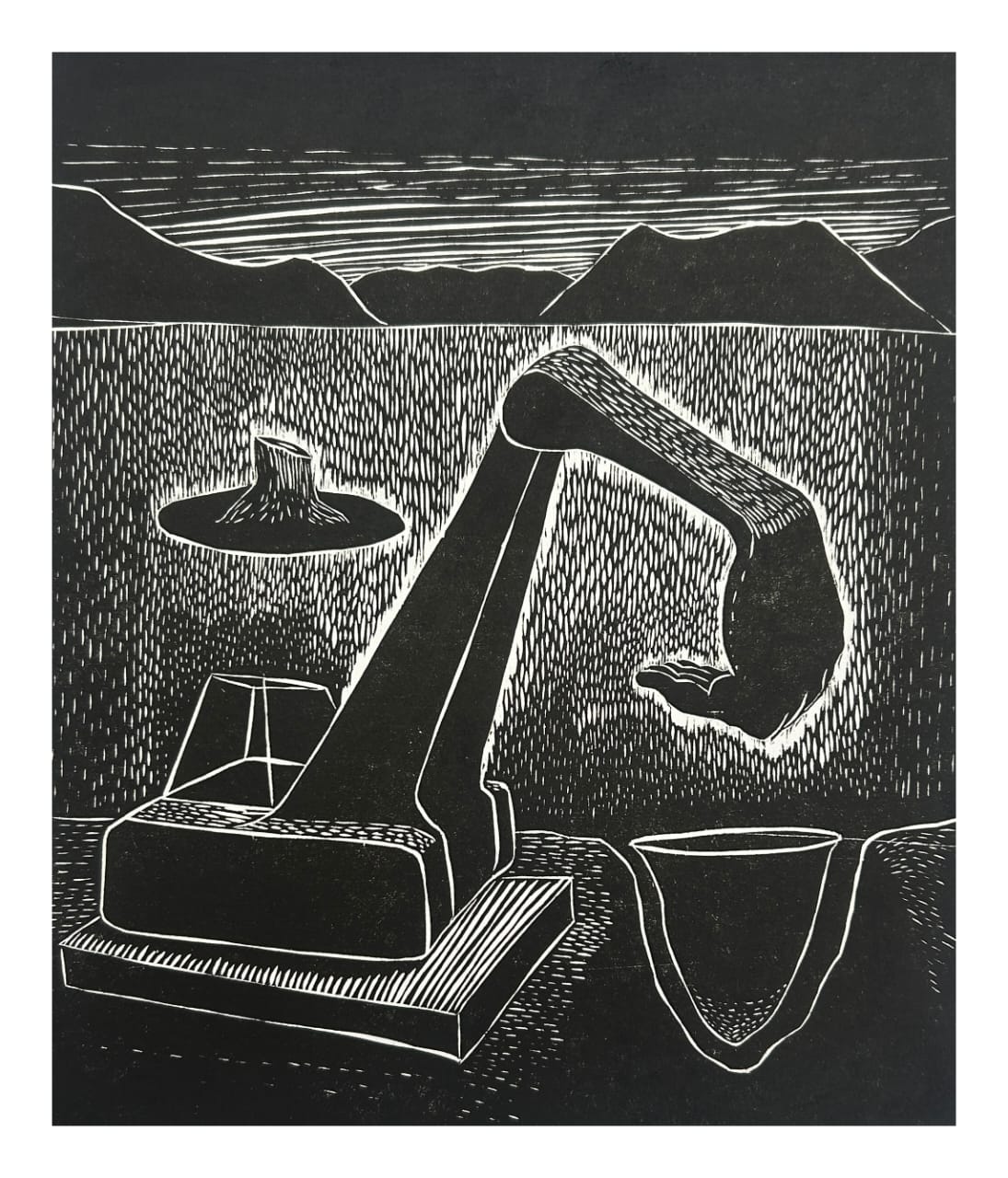
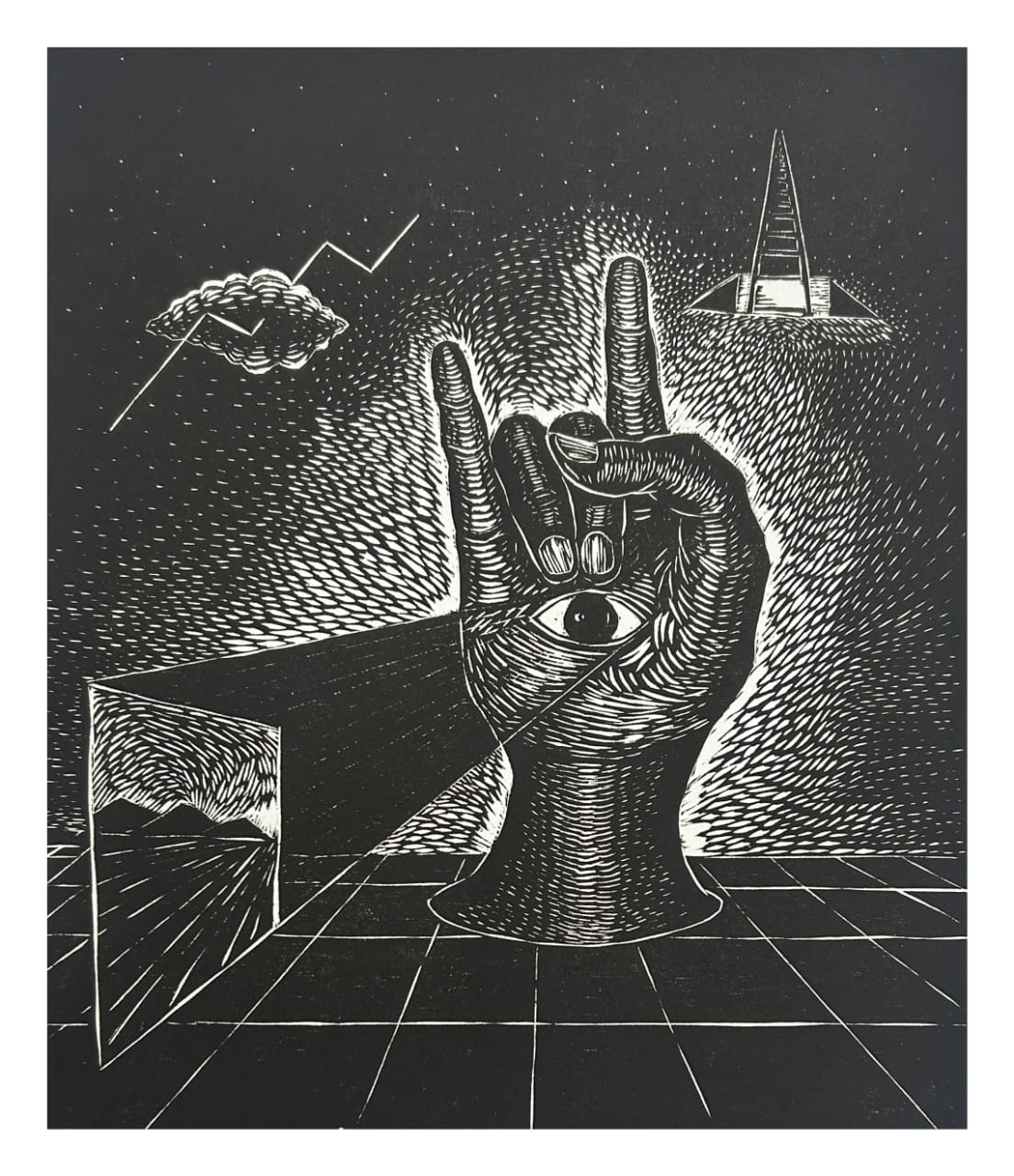
Prashant Kunwar’s graphic print series H(!)t–Bal critically examines the socio-political imprints imposed upon the human body. The recurring motif of the hand operates as a powerful symbol of labor, decision-making, resistance, and agency. Simultaneously, the restrained or bound hand becomes a metaphor for helplessness and systemic control.
On a psychological level, Kunwar’s imagery visualizes fear, internalized censorship, and collective anxiety. Sewn mouths, blinded eyes, and severed tongues are not merely representations of violence, but manifestations of a society conditioned into silence. His works expose how power structures inscribe themselves upon the body and consciousness, transforming physical restraint into psychological compliance.
In Nilesh Shimpi’s paintings, rural life unfolds as a cultural and collective imprint rather than a nostalgic depiction. Themes such as village rituals, festivals, agricultural labor, and everyday domestic practices function as repositories of shared memory and inherited tradition. These images preserve lived experiences that are increasingly marginalized in rapidly urbanizing contexts.
Inspired by the weathered surfaces and faded lines of the Ajanta murals, Shimpi adopts a visual language that
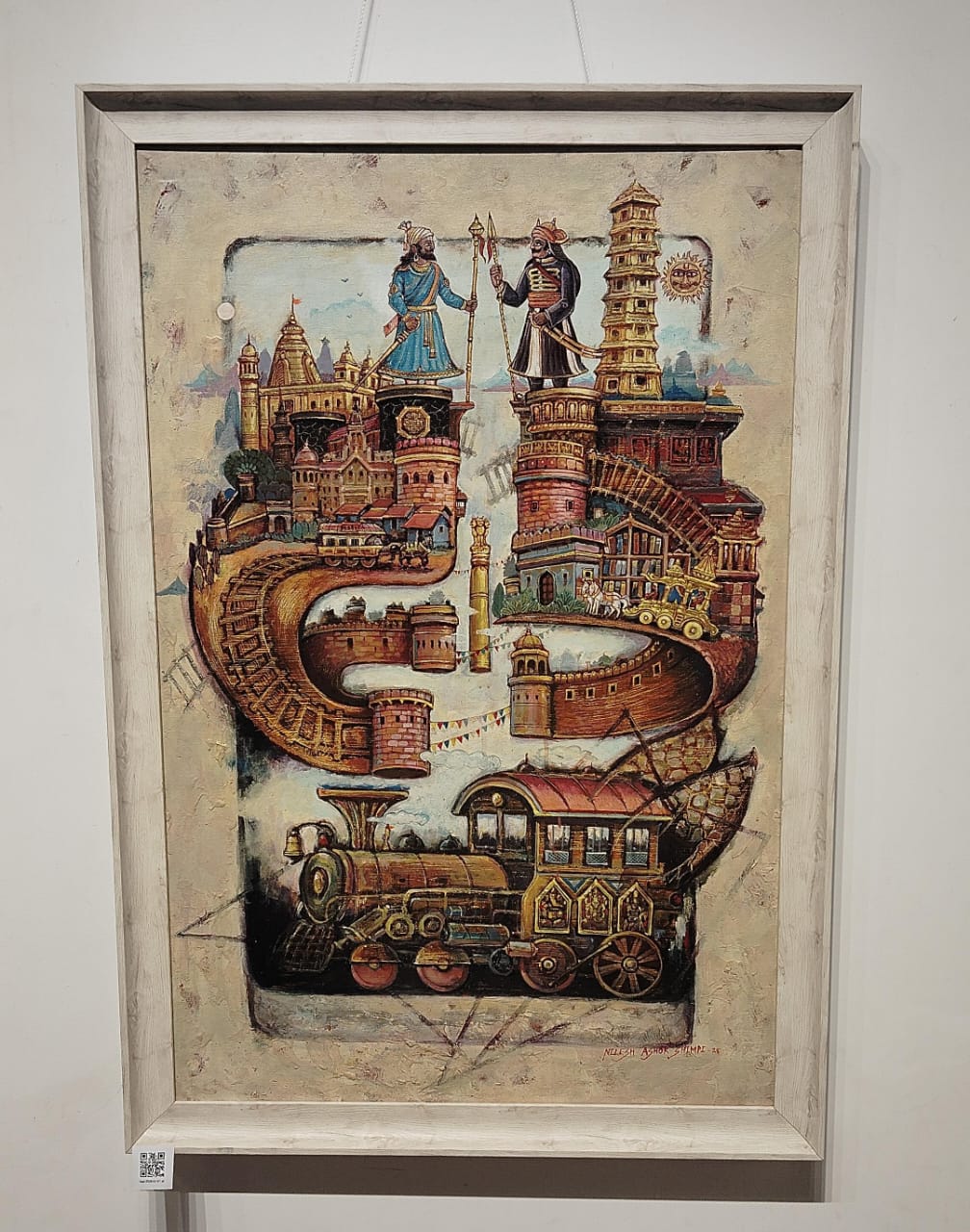
emphasizes endurance over spectacle. Here, the imprint signifies continuity traditions that survive erosion, time, and transformation. His work asserts that cultural identity is sustained not through permanence, but through repetition, memory, and lived practice.
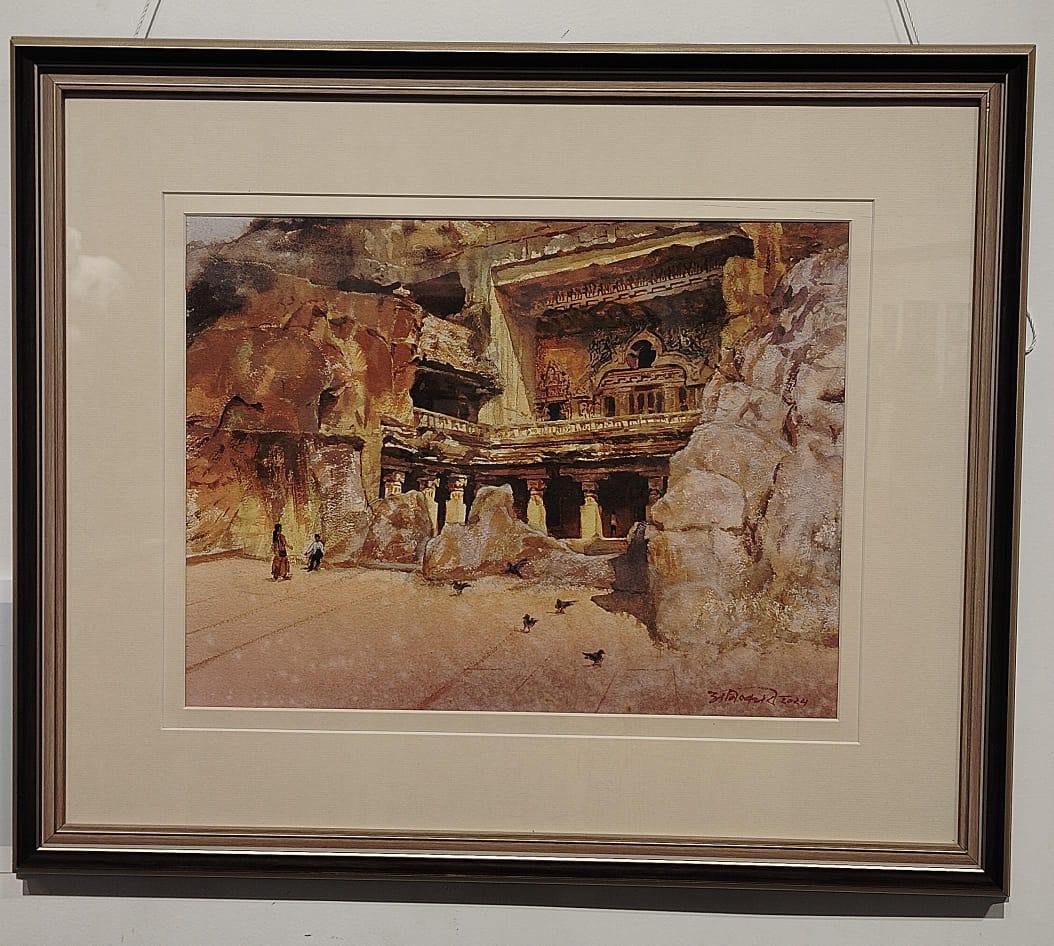
Avishkar Satpute’s work engages with nature not as a subject to be represented, but as an experiential force that shapes consciousness. Sensory elements such as fragrance, light, stillness, and atmosphere inform his visual language, resulting in works that are deeply introspective and meditative. In this context, the imprint becomes sensory and psychological an internal
trace left by direct encounters with nature. Satpute resists intellectual abstraction, instead proposing nature as a space of presence and awareness. His practice reflects a phenomenological approach, where perception itself becomes a site of meaning-making and quiet resistance to artificiality.
Vishakha Kulkarni’s abstract paintings transform the inner psyche into a visual terrain. Through layered colors, rhythmic lines, and carefully negotiated spatial tensions, she articulates emotional states and unconscious processes that resist verbal articulation.
Abstraction in her practice is not an escape from reality but a deeper engagement with it. Psychologically, her work aligns with introspective and
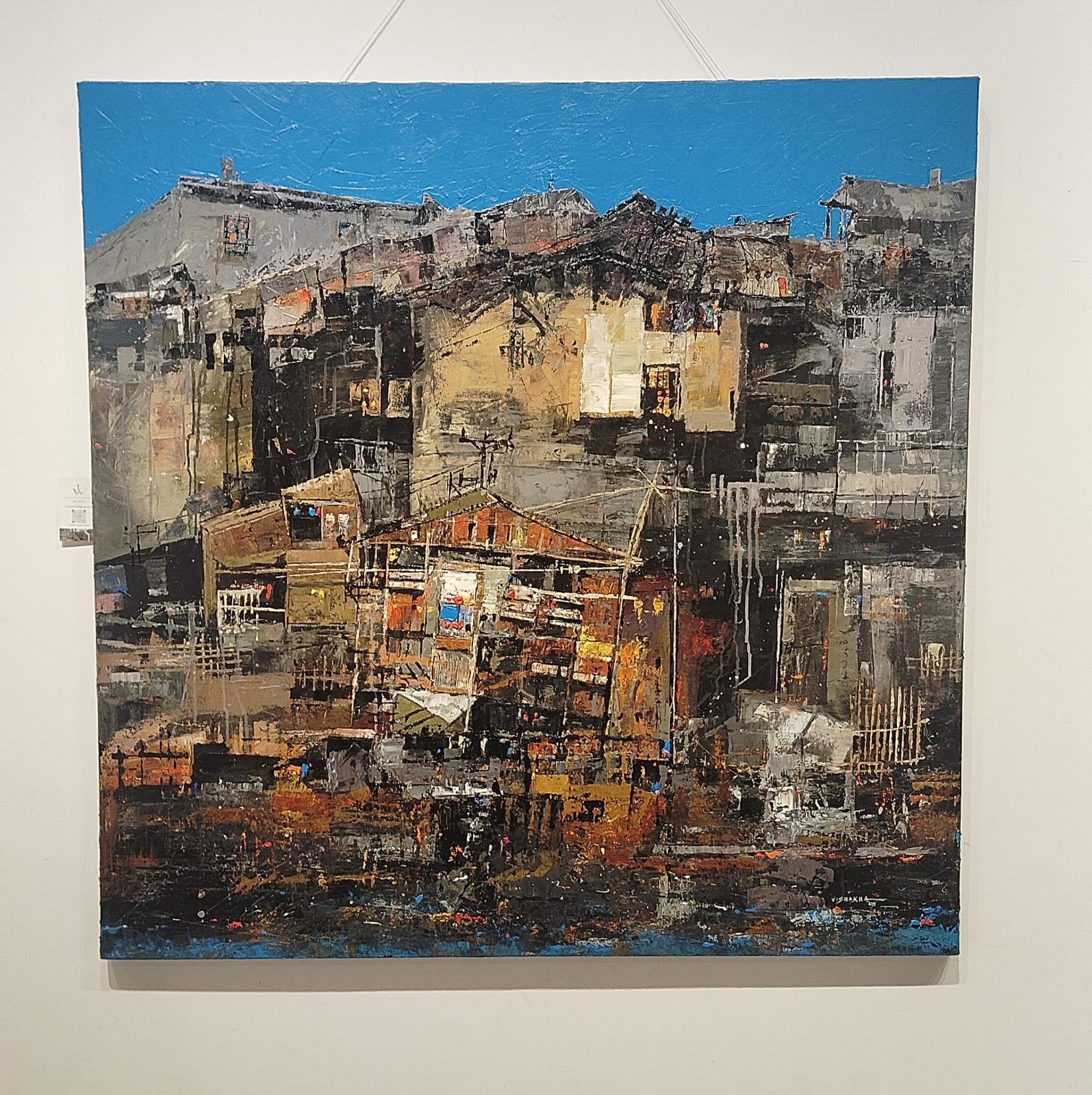
Jungian notions of the unconscious, where suppressed emotions and inner conflicts surface through symbolic form. Each imprint in her paintings functions as a trace of emotional movement unstable, evolving, and unresolved.
Swapnil Zaghade’s conceptual engagement with space provides a structural and theoretical framework for the exhibition. Space in his understanding is never neutral or empty; it actively produces emotional tension, balance, and psychological response. The interplay between openness and confinement becomes a metaphor for mental states such as calm, anxiety, freedom, or restraint.
Through the manipulation of positive and negative space, Zaghade demonstrates how spatial arrangements leave lasting psychological imprints on the viewer. His approach reinforces the exhibition’s premise that space, like memory, absorbs experience and functions as an active participant in meaning-making.
Taken as a whole, Imprints of Existence unfolds the fundamental tensions between creation and decay, freedom and control, nature and system, body and mind. Drawing from Indian philosophical notions of cyclical time, phenomenology, and contemporary theoretical thought, the exhibition approaches existence not as a stable or enduring form, but as a continuously transforming process.
The exhibition proposes art as a liminal space, a threshold between experience and memory. Within this space, the imprint is not an end point, but a pause: a moment of heightened awareness. It offers the viewer an opportunity to recognize their own existence, their own silences, and the traces they leave behind.
Smita Kinkale
Artist & Art Educator